
Kruger · Kalahari · Okavango · Sossusvlei · Kunene · Palmwag · Cape Town
South Africa · Botswana · Namibia
- Duration: 21 Days / 20 Nights
- Dates: Start: 02 August | End: 21 August 2027 & 2028
*Other dates available on request for private/ legacy tours - Group Size: Small group — 6 to 12 persons
- Countries: South Africa | Botswana | Namibia
- Basis: Fully inclusive throughout as listed — all meals, activities, park fees, and local brand drinks
- Starts: OR Tambo International Airport, Johannesburg, South Africa (JNB)
- Ends: Cape Town International Airport, South Africa (CPT)
ABOUT THIS JOURNEY
Southern Africa contains some of the most geologically ancient, ecologically extraordinary, and visually overwhelming landscapes on earth. This twenty-one-day private journey moves through the very best of them — from the ancient bushveld of the Kruger, where the full drama of the African Big Five plays out across nearly 20,000 square kilometres of protected wilderness, to the sand seas and silence of the Namib Desert, where dunes older than any living thing rise above a landscape of almost lunar beauty.
The route is deliberately constructed to offer maximum contrast and maximum depth. The Kruger opens the journey with the raw, familiar intensity of a great African game reserve. The Central Kalahari pivots to something rarer — vast open semi-desert, black-maned lions, and a genuinely humbling encounter with the San Bushmen, the original people of southern Africa. The Okavango Delta delivers the lush, water-filled counterpoint: mokoro excursions, game drives through the private concession, the sounds of hippos at night.
Then Namibia. First Windhoek, the elegant German colonial capital. Then the absolute stillness of Sossusvlei, where the tallest sand dunes in the world rise in shades of orange and red against a white clay pan. Then the Kunene River — a ribbon of permanent water through the Namib’s lunar emptiness, where the Himba people still live as their ancestors did, and where Nile crocodiles bask on rocks that have never seen rain. And finally Palmwag, where the rarest of all — desert-adapted black rhino — are tracked on foot with Save the Rhino Trust monitors in one of the most profound conservation experiences available anywhere.
The journey ends in Cape Town, one of the world’s great cities, backed by Table Mountain and facing the confluence of two oceans. Twenty-one days that move from the bush to the desert to the sea, through three countries and across one of the most extraordinary corners of the planet.
SAFARI HIGHLIGHTS
- Big Five game drives in Kruger National Park — one of Africa’s largest and most celebrated game reserves, spanning nearly 20,000 square kilometres of protected South African bushveld
- Morning and evening game drives tracking lion, leopard, elephant, buffalo, and rhino through the southern Kruger’s varied savanna and riverine habitats
- Central Kalahari Game Reserve — one of Africa’s most remote and least-visited wilderness areas, home to the black-maned Kalahari lion, gemsbok, springbok, brown hyena, and bat-eared fox
- San Bushmen cultural encounter in the Kalahari — a guided, interpreter-led experience with one of Africa’s oldest cultures, learning the tracking skills, plant knowledge, and traditions of the original people of southern Africa
- Night drives in the Kalahari under skies of extraordinary clarity — some of the darkest, most star-filled night skies on the African continent
- Okavango Delta game drives, mokoro excursions, and motorboat safaris through the private Kiri concession — a UNESCO World Heritage Site and one of the world’s most extraordinary inland water systems
- Encounters with lion, buffalo, elephant, leopard, and African wild dog in the private concession waters and floodplains of the Okavango
- Sossusvlei — the world’s tallest sand dunes rising from a white clay pan in the heart of the ancient Namib Desert, explored at dawn as the colours shift from deep orange to burning gold
- Desert ecology walks and stargazing through a state-of-the-art telescope at Sossusvlei, in one of Namibia’s darkest desert night skies
- Kunene River — the only permanent water source in Namibia’s far northwest, where the river carves through the Namib as a green oasis, with Nile crocodiles, endemic desert reptiles, and the extraordinary landscape of Serra Cafema
- Authentic cultural engagement with Himba villagers near the Kunene — one of southern Africa’s most remarkable and least-changed Indigenous communities
- Palmwag Conservancy — joining Save the Rhino Trust monitors on foot to track desert-adapted black rhino in one of the largest free-roaming populations in Africa
- Game drives through the 583,000-hectare Palmwag Concession in search of desert-adapted elephant, giraffe, lion, and the remarkable Welwitschia plant
- Cape Town finale — two nights in the Constantia winelands at one of South Africa’s most celebrated historic estates, with Table Mountain and the Mother City at your feet
- All regional and charter flights between destinations included throughout
DESTINATIONS
Kruger National Park, South Africa
Central Kalahari, Botswana
Okavango Delta, Botswana
Windhoek, Namibia
Sossusvlei, Namib Desert, Namibia
Kunene Region, Namibia
Palmwag Conservancy, Namibia
Cape Town, South Africa

DAY-BY-DAY ITINERARY
All activities, transfers, meals, and park fees as listed are included. Meal basis varies by property — see notes below.
Day 1 | Johannesburg, South Africa
Arrive at OR Tambo International Airport in Johannesburg. Your airport hotel is set adjacent to the terminals — five to ten minutes on foot — making it a seamless overnight transit stop. Check in, rest, and prepare for the journey ahead. Dinner on your own account this evening.
Basis: Bed & Breakfast.
Days 2–4 | Kruger National Park, South Africa
Fly from Johannesburg to Kruger on a regional scheduled flight. Transfer into the southern section of Kruger National Park — one of Africa’s great game reserves, spanning nearly 20,000 square kilometres and home to the full cast of the African bushveld. Three nights of morning and evening game drives in classic Big Five country, with expert guiding in the varied savanna and riverine habitats of the Kruger’s southern section.
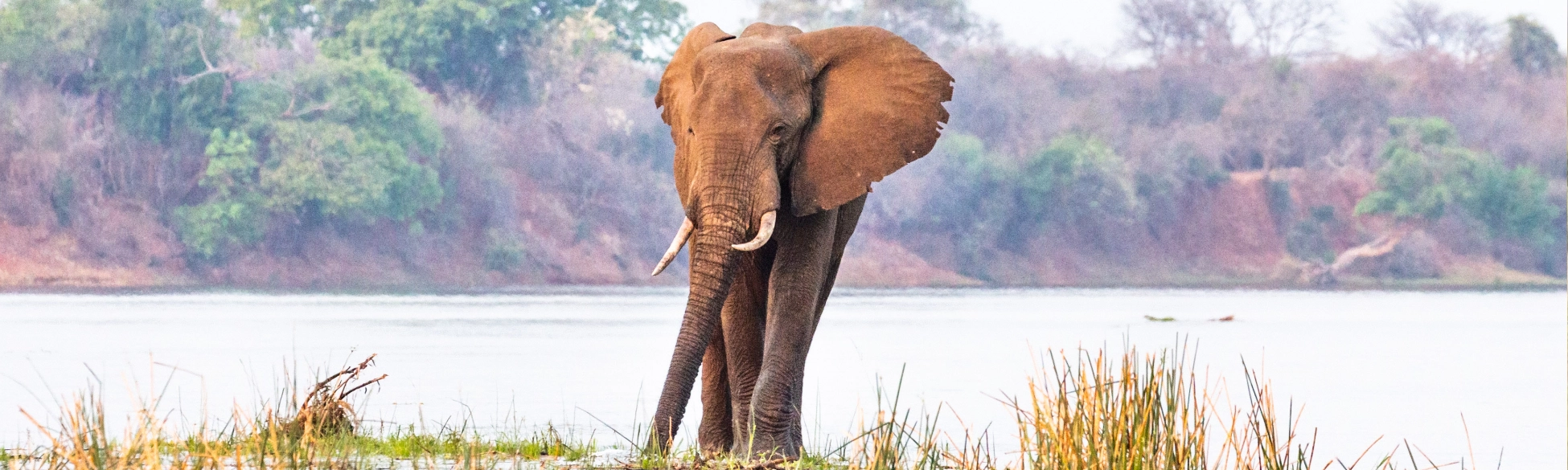
The wildlife density here is extraordinary: elephant herds moving through the mopane, lion prides hunting at dusk, leopard resting in the leadwood trees, white and black rhino at the waterholes, and the massed herds of buffalo along the Sabie River. August is deep dry season — grass is low, water is scarce, and the game concentrates. It is one of the finest months in the Kruger.
Day 5 | Johannesburg (Transit)
Fly from Kruger back to Johannesburg for a one-night transit stay ahead of the flight to Maun the following morning. Dinner on your own account.
Days 6–7 | Central Kalahari, Botswana
Fly from Johannesburg to Maun and charter into the Hania Private Game Reserve on the northern edge of the Central Kalahari. The landscape here is a revelation: not the harsh desert of the imagination but a vast, open semi-arid sand-veld of unusual beauty, where the silence is total and the night sky is extraordinary.
Two nights of game drives and night drives through this remote wilderness, guided by experienced Kalahari specialists. Black-maned Kalahari lions, gemsbok, springbok, bat-eared fox, brown hyena, and caracal all inhabit this landscape. A San Bushmen cultural encounter with members of the local community — guided through an interpreter — is one of the most moving and authentic experiences available in southern Africa. The permanent waterhole in front of the main lodge provides constant, close-up game viewing from camp.
Basis: Fully Inclusive — all meals, local brand drinks, activities, and park fees.
Days 8–10 | Okavango Delta, Botswana
Charter from Maun via Hania Private Reserve to Kiri Airstrip in the Okavango Delta. The flight itself is spectacular — the delta spreading below, a mosaic of channels, islands, and flooded plains stretching to the horizon. Your camp sits on a secluded island in the private Kiri concession, elevated on wooden decks above the ebony forest, with views across the vast floodplains.
Three nights of full Okavango immersion: morning and afternoon game drives through the concession’s open plains and mopane woodland, mokoro excursions through water-lily channels in search of sitatunga and lechwe, motorboat safaris at peak August flood, and guided walks in the shallows. Lion, buffalo, elephant, leopard, and African wild dog all move through this landscape. Evenings bring the extraordinary sounds of the delta — hippos grunting in the channels, the distant call of a fish eagle, the rustle of something large moving through the reeds beyond the firelight.
Day 11 | Windhoek, Namibia
Charter from Kiri Airstrip to Maun, then fly on a regional scheduled flight to Windhoek, Namibia’s elegant and surprising capital. A transit night in a well-appointed guesthouse set on the northern edge of the city — named after the great Victorian explorer Sir Francis Galton, who passed through this region on his expedition to Ovamboland in 1851. Dinner on your own account.
Days 12–13 | Sossusvlei, Namib Desert, Namibia
Fly by scheduled charter from Windhoek to Sossusvlei Airstrip in the heart of the Namib Desert. The descent is unforgettable — the dunes appearing below in shades of orange and deep red, the white clay pans of Sossusvlei and Deadvlei shining against the ancient sand.
Two nights in the Namib Desert — at one of the finest desert lodges in Africa, with stone and glass villas open to the dunes on three sides and a glazed skylight above the bed that lets the stars shine directly onto where you sleep. Activities include early morning dune walks at Sossusvlei and Deadvlei, guided desert ecology walks exploring the extraordinary adaptations of the Namib’s plants and animals, and evening dinners in dramatic desert locations. The observatory with its state-of-the-art telescope brings the southern sky — already extraordinary in this absolute darkness — to extraordinary magnification.
Basis: Fully Inclusive — all meals, local brand drinks, and activities.
Days 14–16 | Kunene Region, Namibia
Fly by scheduled charter from Sossusvlei Airstrip north to Kunene Airstrip in the remote far north-west of Namibia. This is one of the most remote destinations in all of southern Africa — accessible only by small charter aircraft, with no roads in from the south that are passable without specialist vehicles.
The camp sits on elevated decks above the Kunene River, with the Serra Cafema mountains of Angola closing the horizon to the north. The sound of the river is constant — the only permanent water in hundreds of kilometres of desert. Activities include guided nature drives and walks through the extraordinary geological formations of the surrounding landscape, quad bike excursions into the sand sea (guided and dune-sensitive), seasonal boating on the Kunene, and an authentic cultural visit to a neighbouring Himba settlement. The Himba are among the most photogenic and least-changed of southern Africa’s Indigenous communities; the encounter is conducted respectfully, through a guide from the community itself.
Days 17–18 | Palmwag Conservancy, Namibia
Charter from Kunene Airstrip south to Palmwag Airstrip in the heart of the Palmwag Concession. The landscape shifts immediately — from the stark drama of the Kunene to the rugged red sandstone mountains and open gravel plains of Palmwag, dotted with the extraordinary Welwitschia plants that have been growing in this desert for up to 2,000 years.
Desert Rhino Camp is the base for two nights of one of the most extraordinary conservation experiences in Africa. Save the Rhino Trust monitors have patrolled and protected the desert-adapted black rhino of this region for decades, and guests here have the rare opportunity to join them on a guided tracking walk — reading spoor across the gravel plain, following a trail that may lead to a close encounter with one of the rarest large mammals on earth. Nature drives also cover the concession’s remarkable desert-adapted wildlife: elephant, giraffe, gemsbok, oryx, brown hyena, and the striking landscapes of the Namibian northwest.
Days 19–20 | Cape Town, South Africa
Charter from Palmwag Airstrip to Windhoek, then board a regional scheduled flight to Cape Town International Airport. Transfer to the Constantia winelands — the oldest wine-producing valley in South Africa, established in the 17th century — for two final nights at one of the Cape’s most celebrated historic estate hotels.
These two days are at leisure: time to rest after three weeks of extraordinary travel, to walk the vineyard paths, to sit by the pool with a glass of estate wine and absorb the extraordinary mountain backdrop. Cape Town itself is just 30 minutes away for those who wish to explore the V&A Waterfront, Robben Island, or the Bo-Kaap. Dinner, bed, and breakfast included.
Day 21 | Departure
Transfer to Cape Town International Airport for your outbound international flight. End of services. Three countries, twenty-one days, and a journey across some of the most extraordinary landscapes on earth. Southern Africa has a way of staying with you.
WHAT’S INCLUDED
- All ground transfers and airport transfers throughout
- All regional scheduled and charter flights between destinations as listed in the itinerary
- All accommodation as listed
- All meals as specified per property — fully inclusive at all safari properties; dinner, bed & breakfast at Cape Town; bed & breakfast at Johannesburg and Windhoek transit nights
- All local brand drinks at fully inclusive properties — sodas, wine, beer, local spirits, water
- All game-viewing activities as listed — game drives, night drives, guided walks, mokoro excursions, motorboat safaris, desert ecology walks, dune excursions, and desert rhino tracking
- San Bushmen cultural encounter in the Central Kalahari
- Himba village cultural visit in the Kunene region
- Guided rhino tracking walk with Save the Rhino Trust monitors at Palmwag
- Stargazing with state-of-the-art telescope at Sossusvlei
- All national park and conservation area entrance fees throughout South Africa, Botswana, and Namibia
- Expert WWJ expedition leadership and guiding throughout
WHAT’S NOT INCLUDED
- International flights to Johannesburg and from Cape Town
- Entry visas for South Africa, Botswana, and Namibia — guests are responsible for all travel documentation
- Travel insurance — strongly recommended
- Premium brand drinks
- Laundry and items of a personal nature
- Any activities not listed in the inclusions above
- Any costs arising from flight delays, cancellations, or circumstances beyond WWJ’s control
IMPORTANT NOTES
- All charter flights between safari destinations are subject to strict luggage restrictions: 15 kg per person including hand luggage, in soft hold-all type bags only — no hard suitcases or rigid-framed cases
- This is a private itinerary — all vehicles, guides, and activities are exclusive to your party
- Single supplement applies — please contact WWJ for details
- A 30% non-refundable deposit is required on booking confirmation, together with copies of all passports and a completed WWJ Tour Booking Form
- All payments by Electronic or Telegraphic Bank Transfer
- All prices in USD and subject to change due to exchange rate fluctuations or unforeseen cost increases
- WWJ reserves the right to substitute alternative properties and services of equal or superior standard, subject to availability
PRACTICAL INFORMATION
Visas & Passports
Most passport holders including US citizens do not require a visa for South Africa, Botswana, or Namibia for tourist visits of standard duration. Requirements can change without notice; please verify current entry requirements for your nationality for all three countries well in advance of departure. It is your responsibility to hold correct documentation. WWJ accepts no liability for failure to do so.
Travel Insurance
Comprehensive travel insurance is STRONGLY recommended for all WWJ travellers. Coverage should include trip cancellation, emergency medical evacuation and repatriation, personal accident and liability, loss of baggage, and travel delays. Ensure the policy covers small aircraft travel, guided bush walks, and off-road activities. Do not travel without adequate cover.
Health & Vaccinations
Botswana and the Kruger region of South Africa are malaria-risk areas. Please consult your physician or a specialist travel medicine clinic well in advance of departure for current advice on antimalarial prophylaxis. Namibia carries a low-to-moderate risk in northern areas. Recommended vaccinations include hepatitis A and B, typhoid, and tetanus. Check the latest health advisories for all three countries before travel.
Climate in August
August is the peak dry season across southern Africa — and for wildlife viewing, it is close to ideal. Days are warm and sunny (25–32°C) with clear skies throughout Kruger, the Kalahari, and the Okavango. Mornings and evenings are cool — warm layers are essential for open-vehicle game drives at dawn and dusk. The Namib Desert is warm by day but very cold at night; a down jacket is essential at Sossusvlei and Kunene. Cape Town in August is the city’s winter — mild, occasionally rainy, with temperatures between 8°C and 17°C; a warm layer and waterproof are needed.
Clothing & Packing
Neutral-toned safari clothing — khaki, olive, brown, tan — for all game drives and wildlife activities. Warm layers and a good fleece or down jacket are essential for early morning drives and cold Namib Desert nights. Comfortable, closed-toe walking shoes with ankle support for bush walks and rhino tracking. Sun hat, high-factor sunscreen, and lip balm are critical in the desert. Smart-casual attire for evenings at all properties. Soft-sided bags only — 15 kg per person including hand luggage for all charter transfers.
Currency
South African Rand (ZAR) is the local currency in South Africa, and is also widely accepted in Namibia (alongside the Namibian Dollar). US Dollars are accepted at most safari properties across all three countries for personal purchases. Botswana uses the Pula (BWP). Most activities and meals on this itinerary are fully inclusive, so cash requirements in the field are minimal. Carry small USD notes for gratuities and personal purchases.
Electricity
South Africa uses Type M plugs (three large round pins); Botswana and Namibia use a combination of Type M and Type D. All operate on 220–240V/50Hz. A universal travel adapter is strongly recommended. Remote desert camps may have limited charging facilities — USB charging points are usually available in the main lodge; tent charging may be restricted to solar-powered USB.
One of our experts will be in touch within 24 hours.