


INDIA — THE CENTRAL HIGHLANDS
Tigers, Monuments & the Soul of the Subcontinent
Delhi · Agra & the Taj Mahal · Kanha Tiger Reserve · Bandhavgarh Tiger Reserve
- Duration: 11 Days / 10 Nights
- Dates: March–April 2027 (Start: 24 March | End: 3 April 2027)
- Group Size: Small group — 6 persons – 14 persons
- Basis: Bed, Lunch & Dinner (BLD) throughout — all meals included at all properties
- Destinations: India — Delhi | Agra | Kanha Tiger Reserve | Bandhavgarh Tiger Reserve
- Optional Extension: Nepal 6 Days/ 5 Nights — depart Delhi to Kathmandu (see Nepal Post-Tour Extension)
ABOUT THIS JOURNEY
India is a country of staggering contradictions and extraordinary beauty — a place where ancient monuments of heartbreaking grandeur stand against a backdrop of one of the world’s most vibrant, chaotic and deeply fascinating civilisations. And threading through its jungles, in the dappled shadow of the sal and bamboo, moves the animal that has defined this landscape for millennia: the Bengal tiger.
This 11-day journey takes you to the very heart of India’s tiger country — the Central Highlands of Madhya Pradesh, home to two of the finest tiger reserves on earth. But it begins first with the monuments: the Taj Mahal in the early light of morning, the soaring grandeur of Agra Fort, and the UNESCO-listed Humayun’s Tomb in Delhi. Culture and wilderness in equal, extraordinary measure.
In Kanha Tiger Reserve — one of India’s largest and most celebrated wildlife sanctuaries — you will search for tigers in open 4WD jeeps alongside expert naturalists, learning to read the jungle’s language: the alarm calls of deer, the pugmarks in the dust, the stillness that precedes an encounter. In Bandhavgarh, one of the highest densities of tigers in the world awaits. These are not just game drives. They are an education in wildness, ecology and the ancient art of tracking.
JOURNEY HIGHLIGHTS
- The Taj Mahal, Agra — one of the world’s greatest monuments, built in 1632 by Mughal Emperor Shah Jahan, its white marble domes shimmering in the early light
- Agra Fort — a UNESCO World Heritage Site, the magnificent red sandstone fortress built by Emperor Akbar between 1567 and 1573
- Humayun’s Tomb, Delhi — a UNESCO World Heritage Site and architectural precursor to the Taj Mahal, set in classical Mughal gardens
- Qutub Minar Complex, Delhi — the tallest brick minaret in the world, a UNESCO World Heritage Site marking the dawn of Islamic architecture in India
- Kanha Tiger Reserve — one of India’s best tiger habitats and the inspiration for Rudyard Kipling’s The Jungle Book, spread across 1,949 sq km of Central Highland forest
- Search for the Bengal tiger in open 4WD jeeps with expert local naturalists — morning and afternoon game drives in India’s premier tiger country
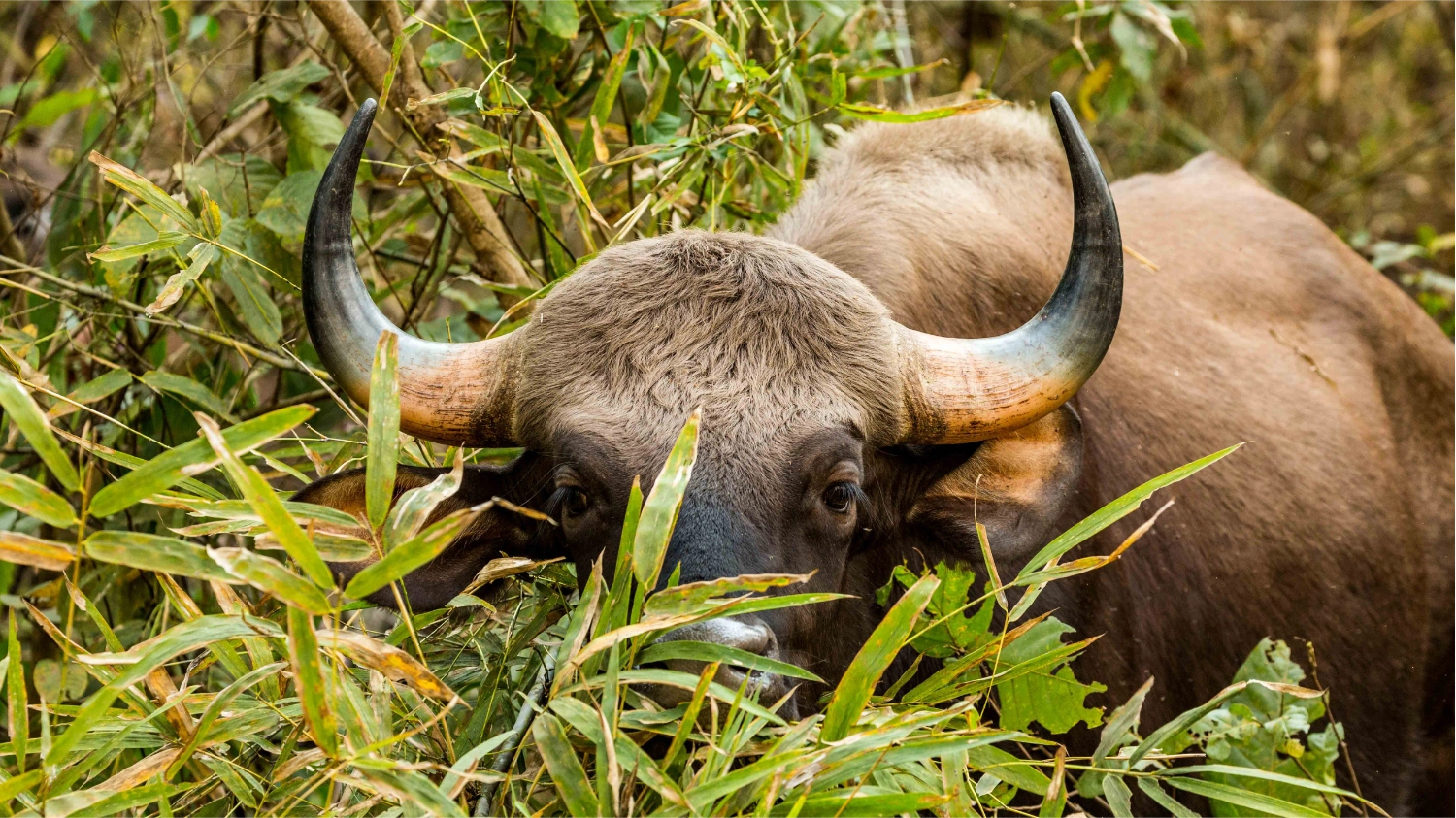
- Kanha’s famous grassy meadows, home to large herds of chital, sambar, barasingha (Hard Ground Swamp Deer), gaur and their predators — tigers, leopards and wild dogs
- The rare barasingha (Hard Ground Swamp Deer) — rescued from near extinction at Kanha and now found nowhere else in the wild
- Bandhavgarh National Park — declared a tiger reserve in 1993 and renowned for having one of the highest densities of tigers in the world
- Expert naturalist presentations on tiger ecology, prey species, forest corridors and tiger conservation in the Satpura–Maikal landscape
- Learn to read tiger signs — tracks, pugmarks, alarm calls and territorial markings — with expert field naturalists
- The vital forest corridor connecting Kanha and Pench National Parks — a globally significant Tiger Conservation Landscape supporting high genetic diversity
- Full-time accompanying Indian naturalist with WWJ guide throughout the journey
- Optional Nepal extension: depart Delhi 3 April for Kathmandu and Chitwan National Park (see Nepal extension details)
DESTINATIONS
New Delhi
Agra & the Taj Mahal
Kanha Tiger Reserve, Central Highlands
Kanha also sits at the heart of the Satpura–Maikal landscape — a globally priority Tiger Conservation Landscape connected to Pench National Park by a vital forest corridor. Wildlife scientists have found that tigers in this landscape show exceptionally high genetic variation, giving them the strongest long-term survival prospects of any tiger population in India.
Bandhavgarh National Park


DAY-BY-DAY ITINERARY
Morning and afternoon game drives daily during tiger reserve sections. All meals included throughout, and local drinks with all meals.
Day 1 Arrive New Delhi
Arrive at Indira Gandhi International Airport, Delhi. Clear immigration and customs and meet your WWJ representative in the arrivals hall for your private transfer into the city. The afternoon and evening are at leisure — settle in, recover from travel and begin to absorb the extraordinary energy of India’s capital. Dinner at your hotel.
Day 2 Delhi to Agra — Agra Fort & the Taj Mahal
After breakfast, depart by road for Agra. On arrival, enjoy lunch before an afternoon visit to the magnificent Agra Fort — the enormous red sandstone fortress built by Emperor Akbar between 1567 and 1573, now a UNESCO World Heritage Site. Then, the centrepiece of the journey and one of the great experiences of a lifetime: the white marble Taj Mahal, built in 1632 by Shah Jahan in memory of his beloved wife Mumtaz. Inlaid with black marble and semi-precious stones, with the entire Koran inscribed on its exterior — the Taj is simply without equal. Note: the Taj Mahal is closed on Fridays; all other monuments remain open. Dinner at your hotel in Agra.
Day 3 Agra to Delhi — Humayun’s Tomb
After breakfast, check out and drive back to Delhi — approximately 4 to 4.5 hours. Lunch at a local Delhi restaurant before an afternoon visit to the UNESCO World Heritage Site of Humayun’s Tomb — the magnificent Mughal garden tomb that served as the architectural inspiration for the Taj Mahal. Built in the 1560s, its red sandstone and white marble symmetry is both serene and profoundly beautiful. Transfer to your Delhi hotel for dinner.
Day 4 Delhi to Kanha Tiger Reserve
After breakfast, transfer to Delhi Airport for a 2-hour flight to Jabalpur in the Central Highlands. On arrival, drive approximately 4 hours into the heart of Kanha Tiger Reserve. Afternoon arrival at your eco-lodge on the forest edge — settle in, enjoy lunch, and then head out for your first afternoon game drive in open 4WD jeeps with your expert naturalist. Evening wildlife presentation on Kanha’s ecology followed by dinner.
Day 5–6 Kanha Tiger Reserve — Tiger Country
Two full days deep in Kanha’s tiger country. Each day follows the same glorious rhythm: an early morning assembly in the darkness before sunrise, tea and coffee, then departure into the forest in open jeeps as the jungle wakes around you. Morning game drives run from first light until mid-morning, returning to the lodge for a late brunch. After rest, afternoon game drives run from mid-afternoon until sunset. Kanha’s vast meadows host large herds of chital, sambar, barasingha and gaur — and wherever the prey gathers, the predators follow. Your expert naturalists will read every sign the forest offers: pugmarks in the dust, alarm calls of deer, the flight of birds above the grass. You will also explore the vital forest corridor connecting Kanha to Pench National Park — a globally significant Tiger Conservation Landscape of great ecological importance.
Day 7 Kanha to Bandhavgarh
Early morning game drive in Kanha, returning for a late brunch. After rest, transfer by road to Bandhavgarh National Park — one of the most tiger-rich habitats in the world. Arrive in the late afternoon and settle into your forest accommodation before dinner.
Day 8–9 Bandhavgarh National Park — Tiger Encounters
Two full days in Bandhavgarh — where the density of tigers is among the highest of any protected area on earth. The same expert pattern applies: pre-dawn departure into the sal forest and grassland in open jeeps, reading the jungle’s signs alongside local naturalists who have spent their lives in this landscape. Bandhavgarh’s relatively compact size and its high tiger population make encounters more frequent here than almost anywhere in India. Morning and afternoon game drives with a midday rest, evening naturalist sessions and dinner.
Day 10 Bandhavgarh to Delhi
Early packed breakfast before departing Bandhavgarh by road for Jabalpur Airport — approximately 4.5 hours. Flight to Delhi, approximately 2 hours. Transfer from Delhi Airport to your hotel near the airport. Afternoon visit to the Qutub Minar Complex — the tallest brick minaret in the world, a UNESCO World Heritage Site and one of Delhi’s most significant historical monuments, marking the dawn of Islamic architecture in India. Dinner at your hotel.
Day 11 Depart Delhi — or Continue to Nepal
Breakfast and check-out. Transfer to Indira Gandhi International Airport for homebound international flights. Those continuing to our Nepal extension depart Delhi today for Kathmandu, with international flights home bookable from Kathmandu.
OPTIONAL NEPAL EXTENSION — KATHMANDU & CHITWAN NATIONAL PARK
For those who wish to extend the journey, a seamless transition from Delhi to Nepal is available, departing day 11 for Kathmandu. The extension includes Kathmandu’s extraordinary UNESCO-listed heritage sites, the ancient medieval city of Bhaktapur, and the lush jungles of Chitwan National Park — one of Asia’s finest wildlife sanctuaries, home to the endangered Greater One-Horned Rhinoceros, sloth bears, gharial crocodiles, Bengal tigers and over 500 bird species. Jeep safaris, walking safaris and boat safaris on the Rapti River, with evening Tharu cultural performances. Return international flights depart Kathmandu after our 5 night tour. Should you wish to stay longer we can arrange extra accommodation and tours. Please enquire for full Nepal extension details and pricing.
WHAT’S INCLUDED
- Return airport transfers on arrival and departure in Delhi
- All accommodation as listed — double/twin shared rooms throughout
- All meals throughout — breakfast, lunch and dinner daily (BLD)
- All local beverages during the tour
- All inter-destination drives in private, air-conditioned vehicles (mini-coach Delhi–Agra–Delhi; 4WD Innovas between parks, with bottled water)
- Full-time accompanying Indian naturalist with WWJ guide throughout
- Local culture guides for all sightseeing in Delhi and Agra
- All monument entrance fees in Delhi and Agra
- Economy domestic flights Delhi–Jabalpur–Delhi
- Game drives in exclusive 4WD open jeeps with tiger reserve entry permits
- All applicable taxes
- Gratuities
- Laundry service at all properties
- Checked baggage: 1 piece of 15kg checked-in + 7kg carry-on for domestic flights
WHAT’S NOT INCLUDED
- International flights to and from Delhi (DEL)
- Visa for India (and Nepal if taking the extension)
- Travel insurance — strongly recommended
- Extra meals outside the tour programme
- Premium brand drinks (wines, Champagne, premium spirits)
- Overweight baggage (pre-booking available: USD 40 for up to 5kg additional; USD 80 for up to 10kg)
- Items of a personal nature, curios and shopping
IMPORTANT NOTES
- Prices are quoted in USD and based on a minimum of 6 guests travelling together.
- All prices are subject to change due to exchange rate fluctuations or unforeseen cost increases.
- All payments must be made by Electronic or Telegraphic Bank Transfer in the currency of the accepted quotation.
- All properties are subject to availability. We reserve the right to substitute alternative accommodation of equal or superior quality if required.
- Domestic flight luggage allowance: 1 piece checked-in at 15kg + 7kg carry-on. Soft hold-all bags only — no hard suitcases or rigid frames. Additional luggage can be pre-booked at USD 40 (up to 5kg extra) or USD 80 (up to 10kg extra).
- Park game drive timings: sunrise to 10:00am and 3:00pm to sunset. Parks are open November to June.
- The Taj Mahal is closed on Fridays. All other monuments remain open on Fridays.

PRACTICAL INFORMATION
Visas for India
All nationalities require a visa for entry into India. An e-Visa (electronic tourist visa) is the most convenient option for most travellers — valid for 60 days and available for multiple entry. Apply online at indianvisaonline.gov.in at least 30 days before arrival. Processing takes 4 days or less. You must carry a printed copy of your e-Visa approval. On arrival at Delhi, proceed to the dedicated e-Visa immigration lane. Ensure your passport is valid for at least 6 months beyond your return date. Have your passport scan and a square JPEG photo (minimum 10KB, maximum 1MB) ready to upload when completing the application.
Travel Insurance
Comprehensive travel insurance is STRONGLY recommended for all travellers. Cover should include trip cancellation due to illness or injury, personal accident and personal liability, loss or damage to baggage, travel and flight delays, and emergency medical evacuation.
Health
Consult your physician or travel health clinic before departure for advice on any recommended vaccinations for India. India is a malaria-risk country in some regions — discuss prophylaxis options with your doctor. Tap water is generally not safe to drink throughout India; bottled water will be provided throughout the tour. Food hygiene standards at the properties on this itinerary are high, but exercise caution with street food if venturing independently.
Climate in March & April
The Central Highlands in late March and April are hot and dry, with daytime temperatures rising into the upper thirties Celsius. Early morning and evening game drives in open jeeps can be noticeably cool, particularly earlier in March — a light fleece or windproof layer is recommended for these. The heat and dry conditions of this season are actually excellent for tiger sightings: as vegetation dies back, tigers are drawn to the more limited water sources and are more easily observed in the open. Delhi and Agra in late March are warm and pleasant.
Clothing & Equipment
Lightweight, easy-care travel clothing is ideal throughout. Muted, neutral colours are essential during game drives — no bright colours, bright hats or brightly coloured accessories in the field, as these reduce wildlife encounter quality. For early morning game drives, bring a light windproof jacket, a warm hat, gloves and a scarf. During the day, a wide-brimmed hat, good sunglasses and high-SPF sunscreen are essential. Comfortable, lightweight walking shoes are advised throughout. One slightly smarter outfit is useful for evenings at the city hotels. Binoculars are highly recommended. Camera equipment, spare batteries, plenty of memory cards and a small daypack for game drives are strongly advised. Dust is significant in the field — plastic bags or cotton pillowcases to protect camera equipment are useful.
One of our experts will be in touch within 24 hours.