THREE RIVERS, THREE WILDERNESSES
From the Secret Plains of the Kafue to the Beating Heart of the Luangwa
Zambia · Kafue · Lower Zambezi · South Luangwa
-
Duration: 14 Days / 13 Nights
-
Dates: Secret Season — May 2027 & 2028 · High Season — August 2027 & 2028
*Other dates available on request for private / legacy tours
-
Group Size: Small group 6 – 12 persons
-
Basis: Fully Inclusive throughout — all meals, all local brand drinks, park fees, game-viewing activities
-
Destinations: Zambia — Kafue | Lower Zambezi | South Luangwa
-
Starts: Kenneth Kaunda International Airport, Lusaka (LUN)
-
Ends: Kenneth Kaunda International Airport, Lusaka (LUN)
ABOUT THIS JOURNEY
Zambia is a country written by its rivers — and this journey follows three of the greatest of them, from the reed-fringed channels of the Kafue to the island-studded sweep of the Lower Zambezi and the great looping meanders of the Luangwa. Over fourteen days, the Three Rivers odyssey moves through three of Africa’s last genuinely wild places, each with its own character, its own light, and its own extraordinary cast of creatures.
It begins in Kafue — Zambia’s oldest and largest park, and one of the last great wildernesses on the continent where you can travel for hours and meet no one at all. It ends in the Luangwa Valley, the birthplace of the walking safari and the beating heart of Zambia’s wild country. Between the two lies the Lower Zambezi, where the river itself becomes the safari.
These are not simply beautiful places. They are places where the natural world still operates on its own ancient terms — where cheetah and wild dog, two of Africa’s rarest predators, hold some of their last strongholds; where leopard move through the dusk in numbers found almost nowhere else on earth; and where an elephant may cross the water in front of your camp as if you were not there at all. To travel here is to feel, briefly, what it means to be a small part of something much larger and much older than yourself.
Throughout, your World Wildlife Journeys guides bring decades of expertise, natural-history knowledge, and storytelling to every drive, every walk, and every quiet moment beneath an infinite Zambian sky. Small in number. Immeasurable in experience.
SAFARI HIGHLIGHTS
- Explore Kafue National Park — Zambia’s oldest and largest reserve, larger than Kruger and roughly the size of Wales, yet one of the least-visited wildernesses in Africa
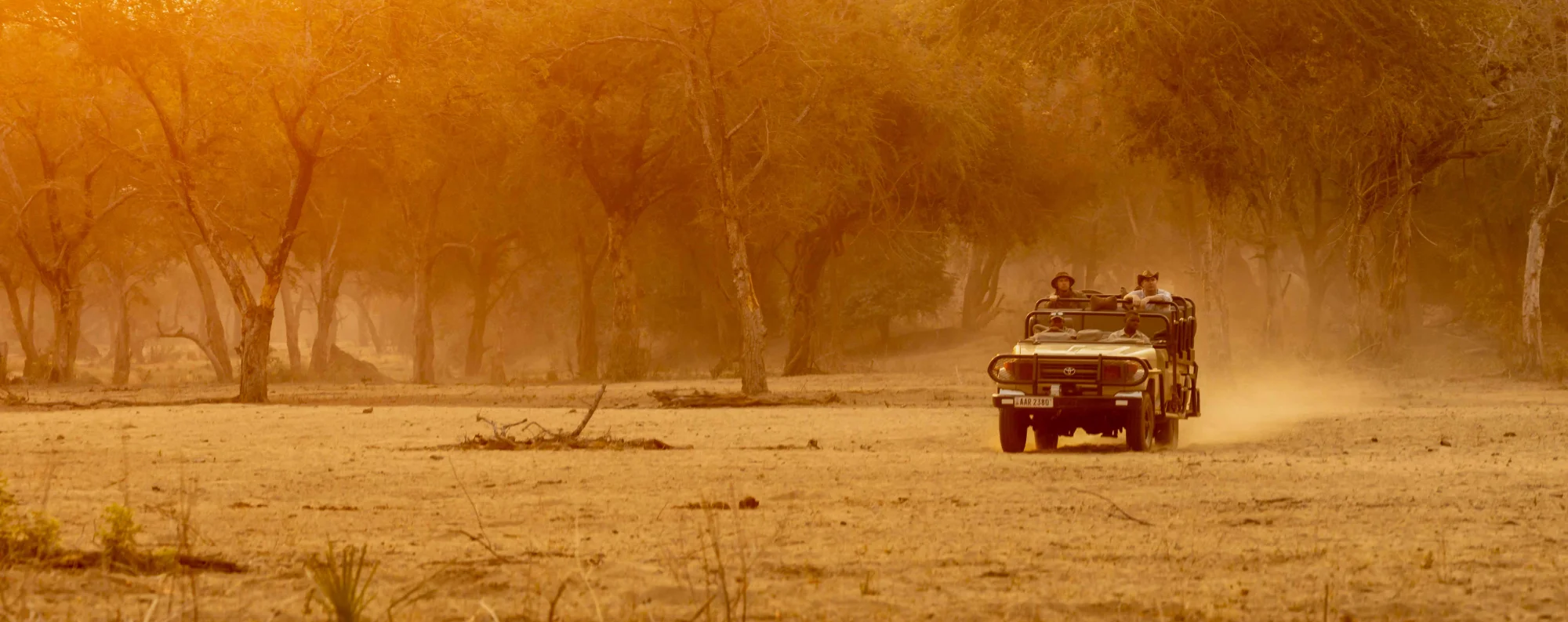
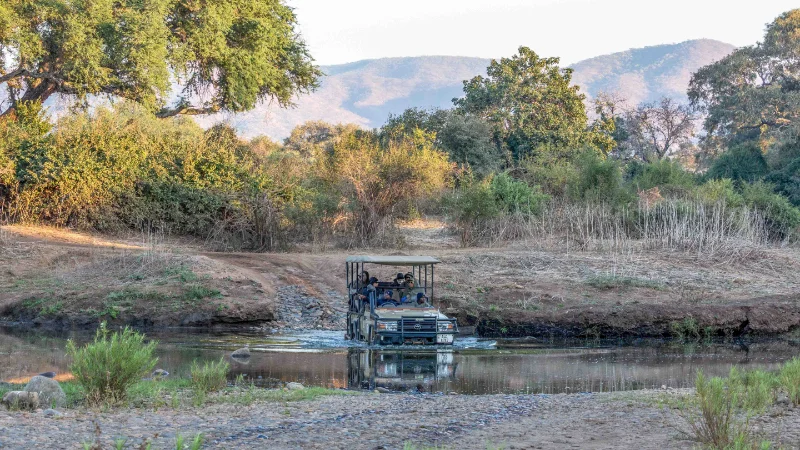
- Begin each Kafue game drive with a short boat crossing of the river — the safari vehicles wait on the far bank, inside the park itself
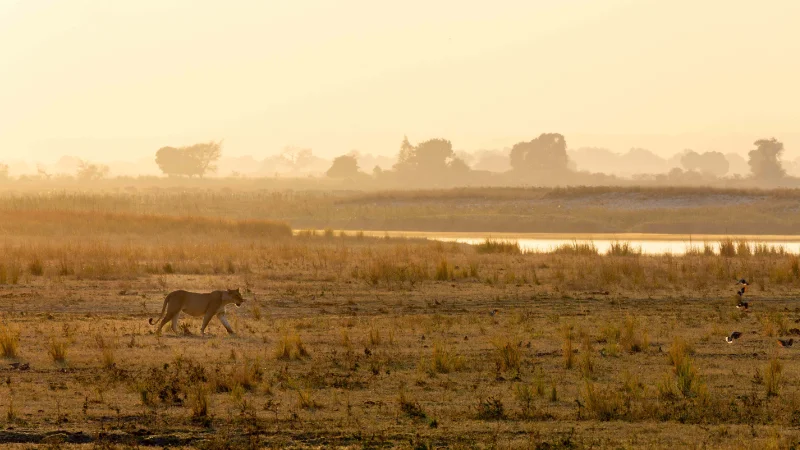
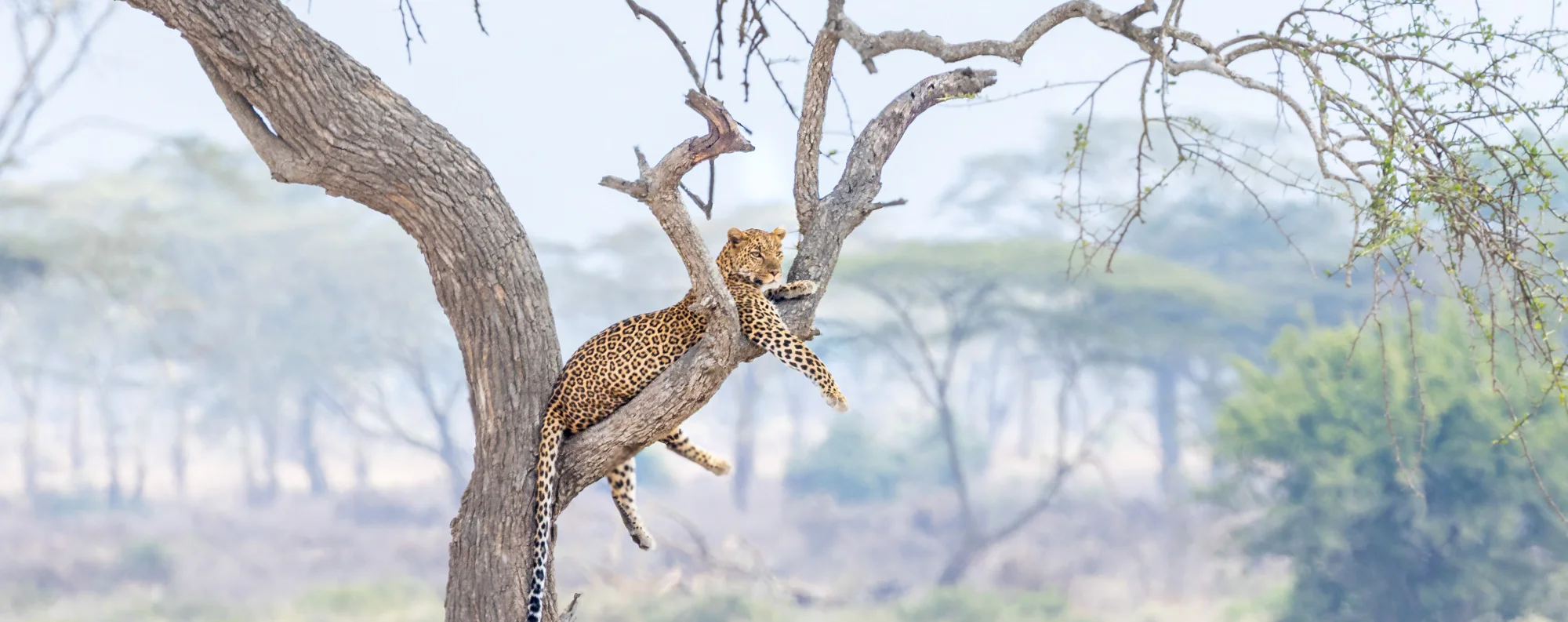
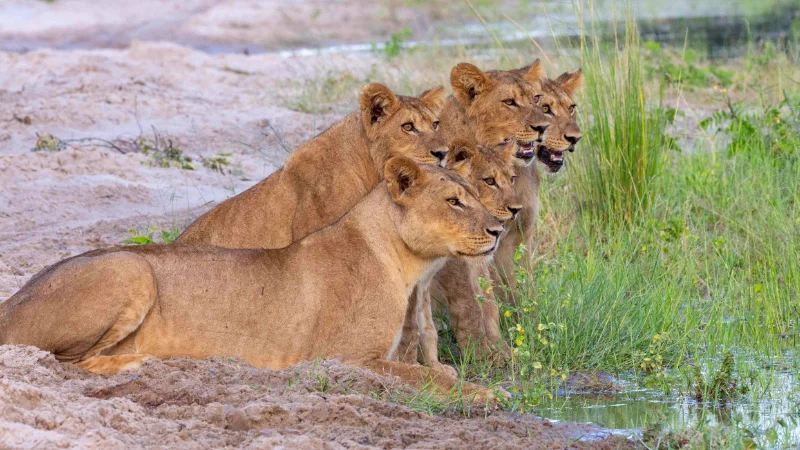
- Search for leopard and lion in one of the finest big-cat regions on the continent
- Encounter cheetah and African wild dog — two of Africa’s rarest predators — in one of their last Zambian strongholds
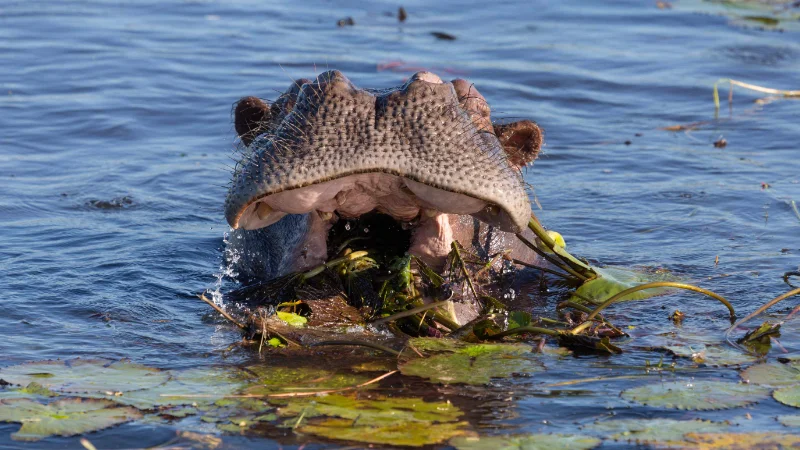
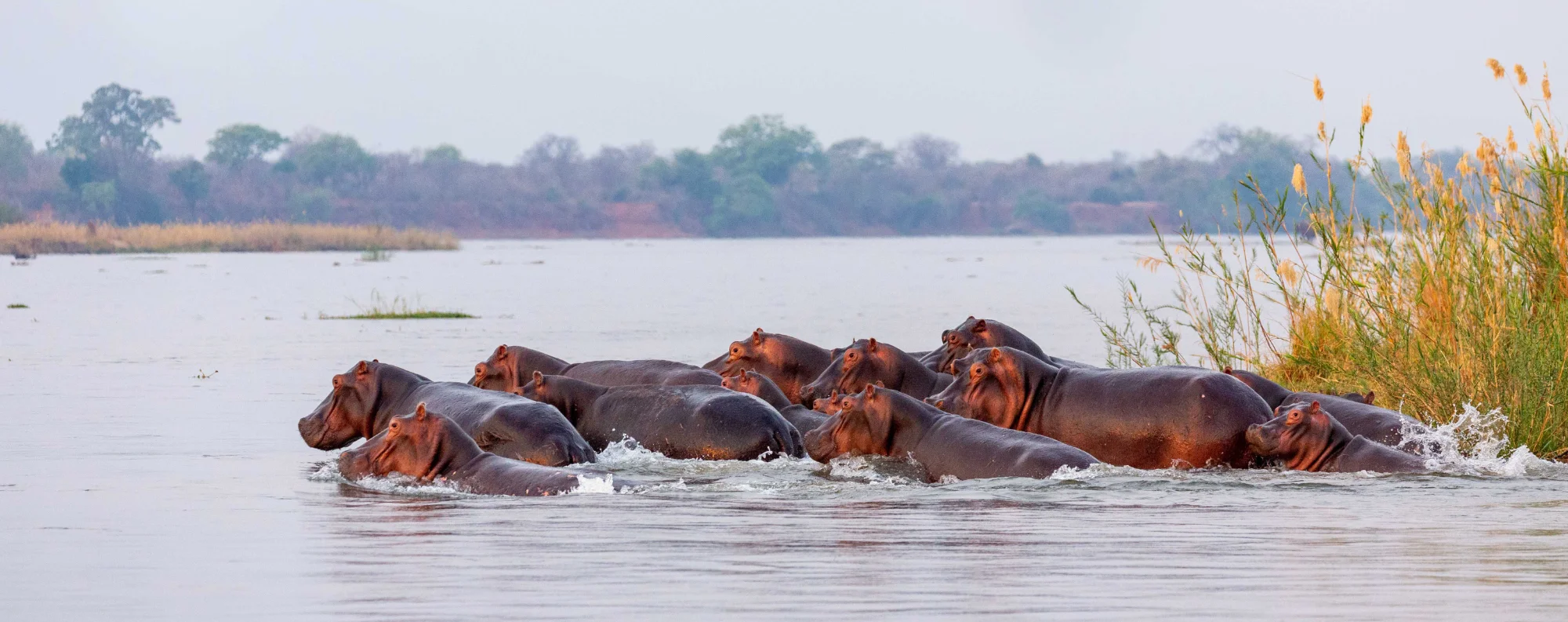
- Drift the Kafue on a sunset cruise past bathing hippo, basking crocodile, and prolific birdlife
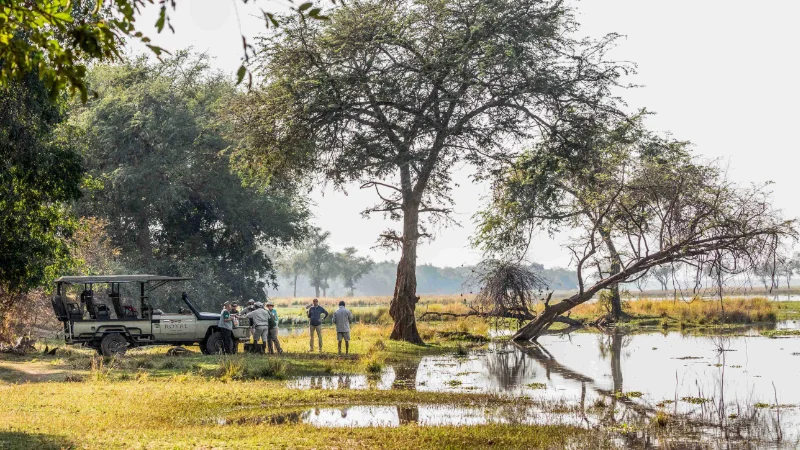
- Walk the floodplains on foot with expert rangers, in the country that gave the world the walking safari
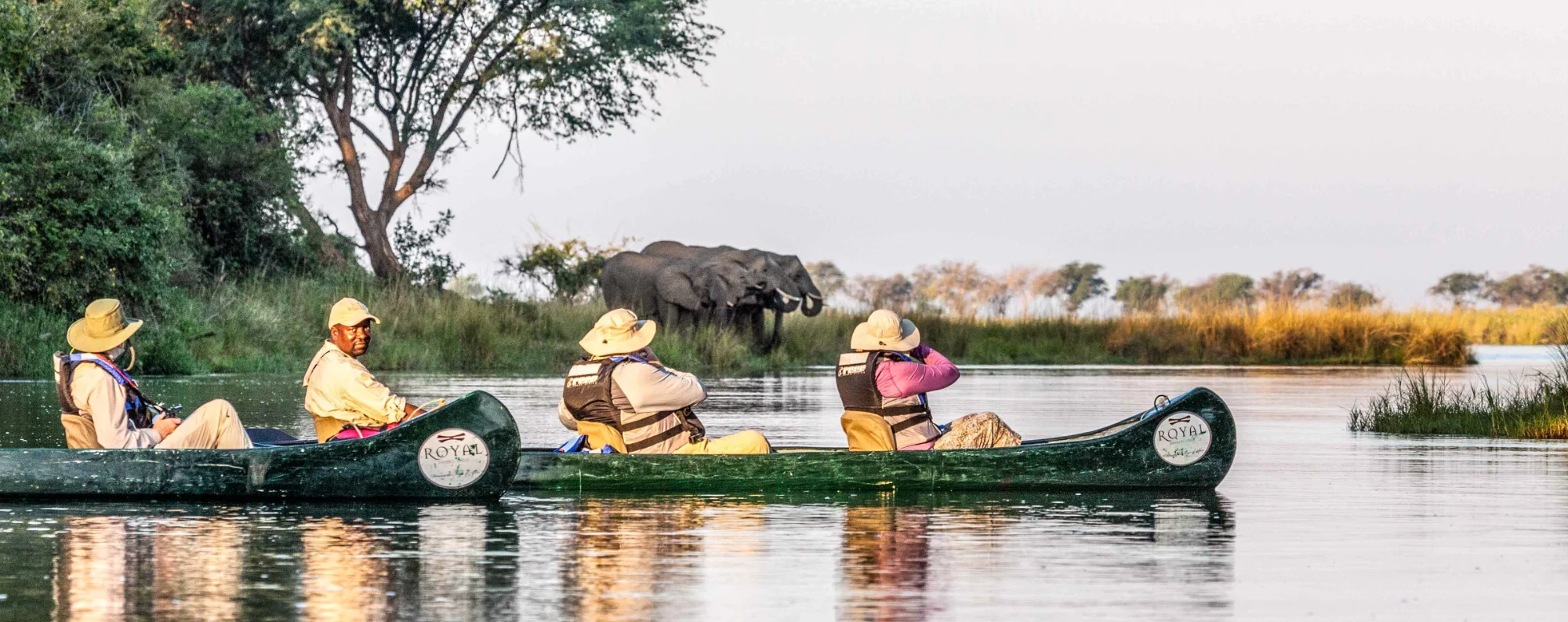
- Canoe the Lower Zambezi at water level, gliding past drinking elephants and surfacing hippo
- Track big cats and the Lower Zambezi’s famous wild dog packs beneath the towering Zambezi Escarpment
- Cast for the legendary tigerfish, one of Africa’s fiercest freshwater fighters
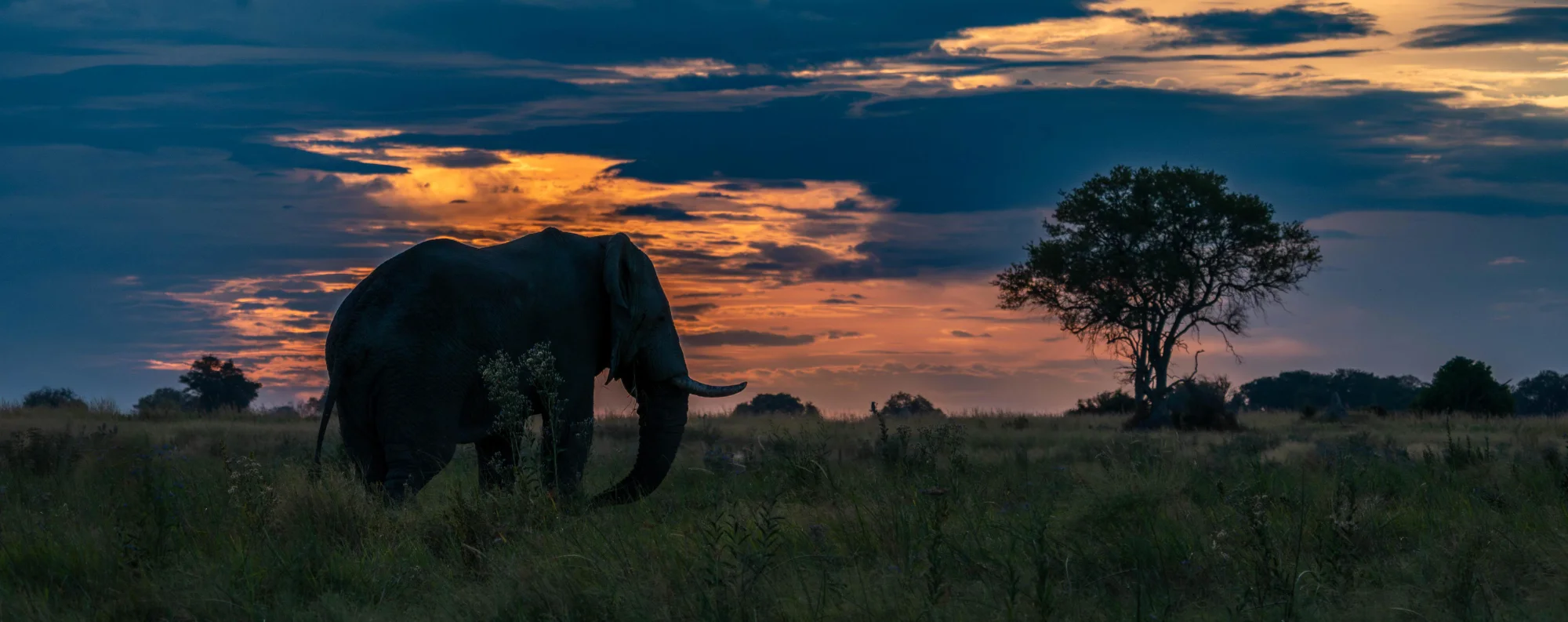
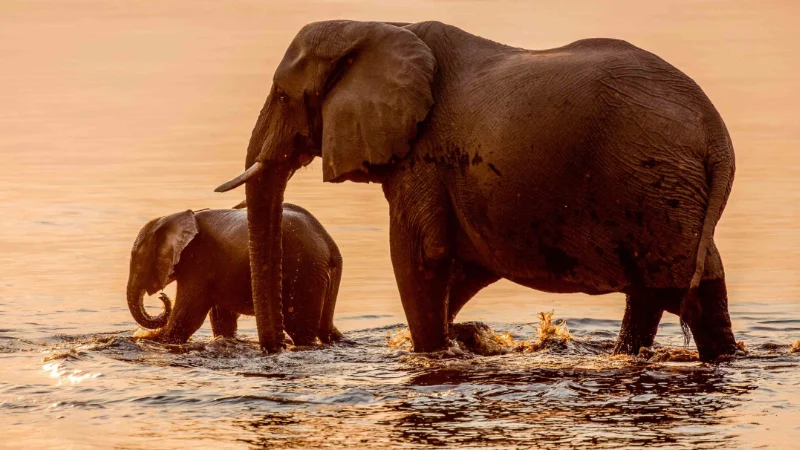
- Watch elephants cross the river in front of camp as the afternoon light turns the Zambezi to bronze
- Walk and drive the South Luangwa Valley — the birthplace of the walking safari, pioneered here by the legendary Norman Carr
- Search for leopard on night drives in the valley long known as the leopard capital of Africa
- See wildlife found nowhere else on earth — the endemic Thornicroft’s giraffe and Crawshay’s zebra
- Outstanding birdwatching across three great river systems, with hundreds of species between them
- Charter and light-aircraft flights between every destination — swift, scenic, and unhurried
- The company of a dedicated professional World Wildlife Journeys guide from arrival to departure
DESTINATIONS
Kafue National Park, Zambia
Fly west from Lusaka and the land opens into something vast and almost forgotten. Kafue is Zambia’s oldest and largest national park — more than 22,400 square kilometres, larger than the whole of South Africa’s Kruger and roughly the size of Wales — yet it receives only a fraction of the visitors. It is a mosaic of miombo woodland, granite outcrops, palm-dotted floodplains and slow-moving rivers, all bound together by the great Kafue River that gives the park its name. On its banks stands Mukambi Safari Lodge, long known as the gateway to Kafue, where luxury tented suites look out over the water and hippos wallow in the shallows below. There is a lovely ritual to the days here: each game drive begins with a short boat crossing, for the vehicles wait on the far bank, inside the park. Kafue is regarded as one of the finest places in Africa to find leopard, and — remarkably — it holds cheetah and wild dog, two predators that have vanished from much of the continent. This is Africa as it once was, and here still is: uncrowded, unhurried, and wholly wild.
The Lower Zambezi, Zambia
East again, and the land drops toward one of Africa’s most dramatic river valleys. The Lower Zambezi lies in the shadow of the towering Zambezi Escarpment, which rises like a green wall on one side while the mighty Zambezi unspools on the other. Between them runs a natural wildlife corridor where animals move freely between dense forest, open floodplain and the winding channels of the water. Royal Zambezi Lodge sits directly on the river’s edge, its deluxe suites opening onto private decks and plunge pools; elephants are often seen crossing in front of camp in a breathtaking display. What sets the Lower Zambezi apart from anywhere else is that the river is as much a part of the adventure as the land. Here you can track big cats and wild dog on a game drive, drift silently past drinking elephants by canoe, glide into a sunset cruise as hippos surface around you, walk with expert guides, or match yourself against the legendary tigerfish. Whether you seek adventure or absolute stillness, the Lower Zambezi offers both in a single golden afternoon.
South Luangwa National Park, Zambia
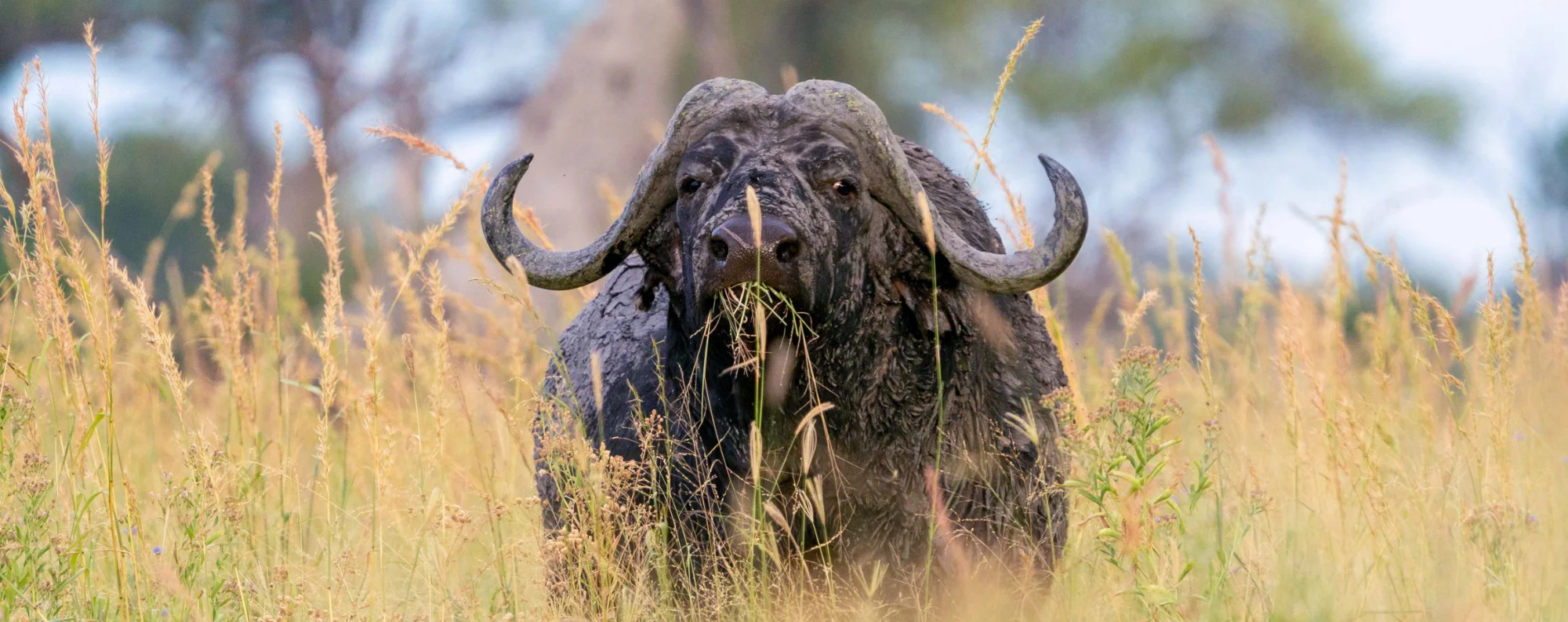
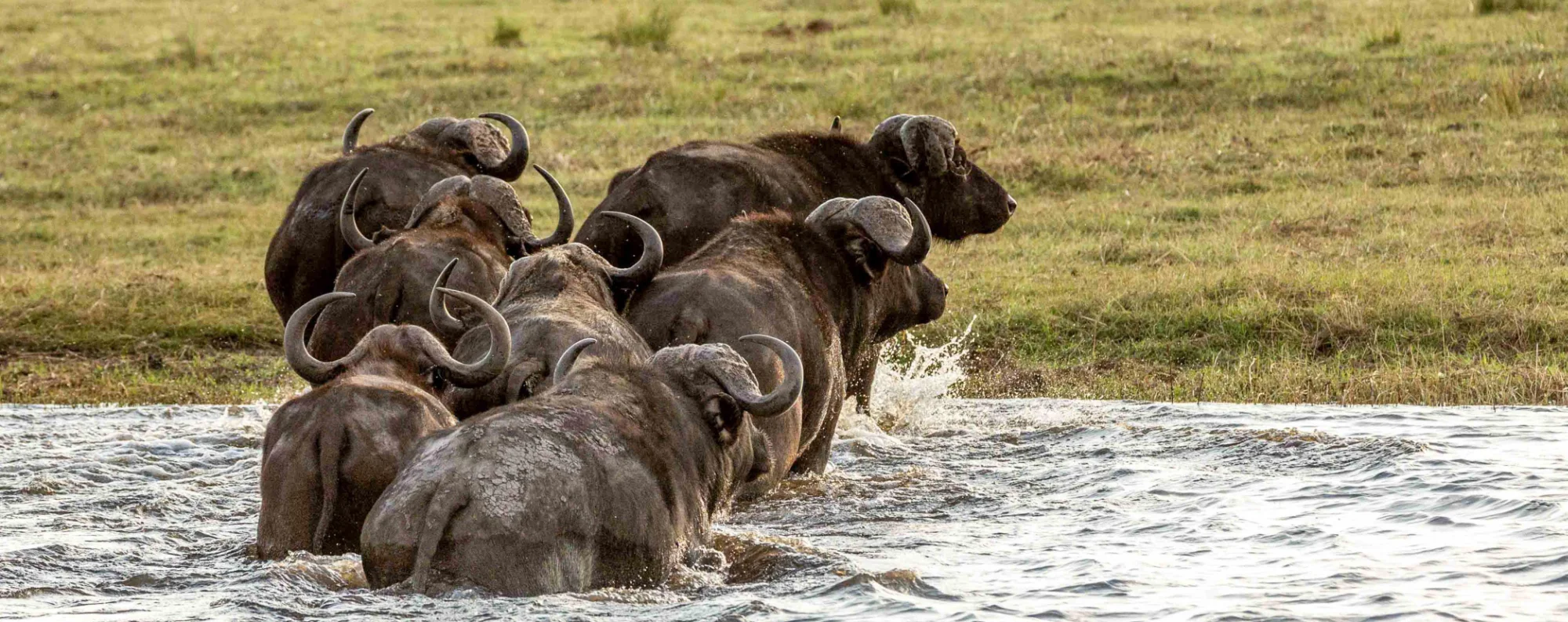
The final wilderness is, for many, the beating heart of Zambia. The Luangwa River loops and coils across the valley floor, forever carving new channels and leaving behind crescent-shaped oxbow lagoons that gather wildlife in astonishing concentration. This is the birthplace of the walking safari, pioneered here by the legendary conservationist Norman Carr, and to this day there is no finer place on earth to explore the bush on foot, led by guides who read the ground like a language they were born speaking. South Luangwa is famous above all for its leopard, present in one of the highest densities anywhere in Africa and often seen padding through the half-light on a night drive. But the valley teems with far more: great herds of elephant and buffalo, hippo packed into every bend of the river, and the Thornicroft’s giraffe and Crawshay’s zebra found nowhere else on earth. From Lion Camp, elevated above the valley floor, canvas-and-thatch suites overlook an oxbow lagoon alive with wildlife. Luangwa is where the journey reaches its deepest point — and where, for many guests, the truest Africa is finally, unforgettably found.
DAY-BY-DAY ITINERARY
All activities, transfers, flights, and game-viewing as listed are included in the total cost. Fully inclusive throughout. Days on which you travel between camps are shared across both destinations.
Day 1 | Lusaka, Zambia
Arrive at Kenneth Kaunda International Airport and clear customs. Your World Wildlife Journeys guide will meet you in the arrivals hall and transfer you to Ciêla Resort & Spa, set in landscaped grounds on the edge of the city. After long-haul flights, the evening is a gentle decompression — a chance to rest and gather as a group. Welcome dinner and overnight, Lusaka.
Days 2–5 | Kafue National Park
A light-aircraft charter carries you west from Lusaka to Chunga airstrip, on the doorstep of Mukambi Safari Lodge on the Kafue River. Three nights follow at an unhurried, richly rewarding pace. Each game drive begins with a short boat crossing to reach the vehicles inside the park; days move between drives across the plains, guided walks on foot with expert rangers, sunset cruises on the river, and — for those who wish — a little fishing or a visit to the Mukambi Community School. Leopard are a real possibility here, alongside lion, and the rare chance of cheetah or wild dog. Evenings end by candlelight to the music of the bush. Depart Kafue on the morning of Day 5.
Days 5–9 | The Lower Zambezi
A short light-aircraft flight brings you to the Royal Zambezi airstrip and on to Royal Zambezi Lodge, on the very edge of the river. Four nights here are divided between land and water. Morning and afternoon game drives track big cats and wild dog along the floodplain; canoe safaris drift past drinking elephants and surfacing hippo; sunset cruises glide beneath the escarpment as the light turns to fire; and walking safaris bring you to the level of the tracks themselves. Anglers may try for the legendary tigerfish. From the private deck of your suite, elephants are often seen crossing the water below. Depart the Lower Zambezi on the morning of Day 9.
Days 9–13 | South Luangwa National Park
A final light-aircraft flight crosses to Mfuwe, gateway to the Luangwa Valley, followed by a scenic transfer to Lion Camp, elevated above an oxbow lagoon. Four nights here reach the deepest point of the journey. Guided walks in the birthplace of the walking safari read the land on foot; morning, afternoon and night game drives search the river bends and lagoons for the valley’s celebrated leopard; and the wider cast — elephant, buffalo, hippo, the endemic Thornicroft’s giraffe and Crawshay’s zebra — appears in remarkable abundance. Sundowners and stargazing close each day. Depart South Luangwa on the morning of Day 13.
Days 13–14 | Lusaka & Departure
Fly from Mfuwe back to Lusaka, where a day room or a final overnight awaits — a chance to rest, reflect, and raise a glass to the wilderness you have crossed before onward international flights.
For those not ready for the journey to end, Lusaka is the ideal launch point for an extension to Victoria Falls, Chobe, or Cape Town. Ask us about the post-tour extensions.
WHAT’S INCLUDED
- All accommodation as listed, on a fully inclusive basis throughout
- All meals from dinner on Day 1 to breakfast on Day 14
- All local brand drinks at the safari lodges — sodas, wine, beer, local spirits, tea, coffee and water
- All national park, conservation and community fees and levies
- All game-viewing activities as described — game drives, walking safaris, boat & canoe safaris, sunset cruises
- All charter and light-aircraft flights between destinations
- Meet & greet and private ground transfers in Lusaka, on arrival and departure
- One night in Lusaka on arrival, and a day room or overnight on departure
- Laundry at the safari lodges
- Staff tips at the camps during the main safari circuit
WHAT’S NOT INCLUDED
- International flights to and from Zambia
- Zambian entry visa — guests are responsible for all required travel documentation
- Travel insurance — strongly recommended (see Practical Information below)
- Premium brand drinks (Champagne, premium spirits)
- Meals and drinks in Lusaka beyond those specified
- Laundry and items of a personal nature
- Gratuities for your WWJ guide (at your discretion)
- Optional activities not listed in the itinerary (e.g. spa treatments)
- Post-tour extensions to Victoria Falls, Chobe or Cape Town
- Any costs arising from flight delays, cancellations, or circumstances beyond WWJ’s control
IMPORTANT NOTES
- This itinerary operates for a minimum of 6 and a maximum of 12 guests; a minimum of 6 is required to guarantee a departure.
- Early arrival in Lusaka is recommended to allow for international flight delays and connections — please enquire with WWJ about additional nights at the same property.
- Charter and light-aircraft flights between destinations are subject to weather and operational factors; flexibility on travel days is appreciated.
- Luggage restriction for all light-aircraft transfers: 15 kg checked and 5 kg hand luggage per person, in soft hold-all type bags only — no hard suitcases or rigid-framed cases.
- Accommodation is on a twin / double-share basis; a single supplement is available on request — please contact WWJ for details.
- A Yellow Fever certificate may be required depending on your country of origin or recent travel history — please confirm current requirements before travel.
- The safari areas are unfenced wilderness; all relevant safety protocols are fully briefed by guides and camp management on arrival.
- A 30% non-refundable deposit is required on booking confirmation, together with copies of all passports and a completed WWJ Tour Booking Form.
- All payments by Electronic or Telegraphic Bank Transfer.
- Rates are in USD and subject to change until a booking is confirmed and paid in full.
- WWJ reserves the right to substitute alternative properties and services of equal or superior standard, subject to availability.
PRACTICAL INFORMATION
Visas & Passports
Most passport holders require a visa to enter Zambia, generally available as an eVisa in advance or on arrival at Kenneth Kaunda International Airport (payable in USD). Visa requirements can change without notice; guests should verify the current requirements for their nationality well in advance by contacting the relevant Zambian mission. Passports should be valid for at least six months beyond the date of travel, with ample blank pages. It is your responsibility to hold the correct documentation. WWJ accepts no liability for failure to do so.
Travel Insurance
Comprehensive travel insurance is STRONGLY recommended for all WWJ travellers and is considered an essential part of any safari. Your policy should cover, at minimum: trip cancellation due to illness or injury, emergency medical evacuation and repatriation, personal accident and personal liability, loss of or damage to baggage, and travel and flight delays. Please ensure your policy is valid for light-aircraft transfers and guided walking safaris in remote wilderness areas. Do not travel without adequate cover.
Health & Vaccinations
Zambia is a malaria-risk region. Guests should consult their physician or a specialist travel-medicine clinic well in advance for advice on antimalarial prophylaxis and all recommended vaccinations. A Yellow Fever certificate is generally required only for travellers arriving from, or transiting through, a Yellow Fever–endemic country — please confirm current requirements based on your routing before booking, and carry all vaccination documentation with you.
Climate in May & August
The two eparture windows offer two distinct faces of the Zambian year. May, at the close of the green (secret) season, brings lush landscapes, dramatic skies, and pleasantly warm days, with the occasional late shower and outstanding birdlife. August falls in the heart of the dry season — widely regarded as the finest time for wildlife viewing — with warm, clear days typically between 25°C and 32°C, and genuinely cold early mornings that can drop toward single figures on open game drives. Layers are essential in both seasons; visibility in August is exceptional as the bush thins and wildlife concentrates at the rivers.
Clothing & Packing
Lightweight, neutral-coloured safari clothing in khaki, olive, tan and brown is recommended for all activities; bright colours and white are best avoided in the field. A warm fleece or down layer is essential for early-morning game drives, especially in August. Comfortable, sturdy walking shoes with ankle support are recommended for bush walks, and smart-casual attire is appropriate for evenings at camp. Remember the 15 kg checked plus 5 kg hand luggage allowance for light-aircraft transfers — soft bags only, no hard cases. WWJ provides a detailed packing list on confirmation of booking.
Currency
The Zambian Kwacha (ZMW) is the local currency, while US Dollars are widely accepted for tourism, gratuities and personal purchases and are recommended for cash in the field. Credit cards are accepted at many establishments in Lusaka (but not at all lodges), but ATM access becomes limited in remote safari areas. Carry a mix of small-denomination USD notes in good condition. As most of this itinerary is fully inclusive, cash requirements in the field are minimal.
Electricity
Zambia operates on 230V / 50Hz current and uses Type C, D and G plugs. Remote bush camps typically run on solar power with limited charging facilities — USB ports and sockets are usually available in the main lounge or dining area, while charging in tents may be limited. A universal travel adapter is strongly recommended.
One of our experts will be in touch within 24 hours.